















Stash Features
A complete Kubernetes native disaster recovery solution for backup and restore your volumes and databases in Kubernetes on any public and private clouds.
Declarative API
Backup your data in Kubernetes native way. Stash uses Custom Resource Definition (CRD) to specify targets and behaviors of the backup and restore process. Schedule a backup for your workloads in the same way you deployed them into Kubernetes.

Backup Kubernetes Volumes
Backup your Kubernetes volumes mounted in a workload. Stash supports Deployment, DaemonSet, StatefulSet, ReplicaSet, ReplicationController, OpenShift DeploymentConfig etc. You can also backup stand-alone PVC with "ReadWriteMany" access mode.

Backup Database
Backup your databases deployed in Kubernetes. Stash supports backup of MariaDB, Redis, PostgreSQL, MySQL, MongoDB, Elasticsearch and Percona XtraDB, Etcd databases. It seemingly integrates with KubeDB. It is now a recommended method to backup KubeDB supported databases.
Backup Virtual Machines
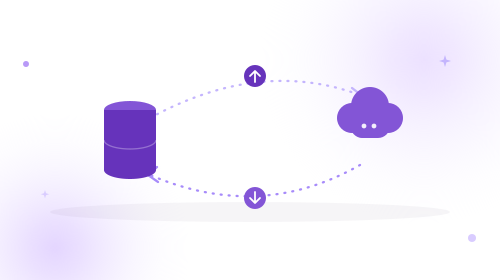
Protect virtual machines running on Kubernetes with the same policy-driven workflow used for your databases and volumes. Stash schedules backups, verifies snapshots, and restores VMs on demand — no separate tooling required.
Multiple Storage Support
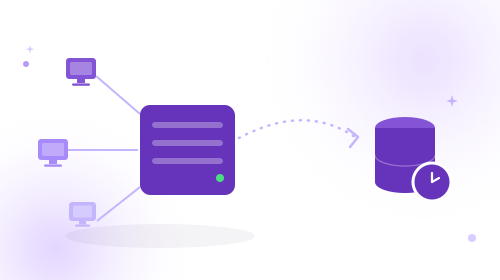
You can store your backed up data into various storage services. Stash supports AWS S3, Minio, Rook, Google Cloud Storage, Azure Blob Storage, OpenStack Swift, DigitalOcean Spaces, Blackbaze B2 and REST server as backend. You can also use Kubernetes persistent volumes as backend.
Deduplication
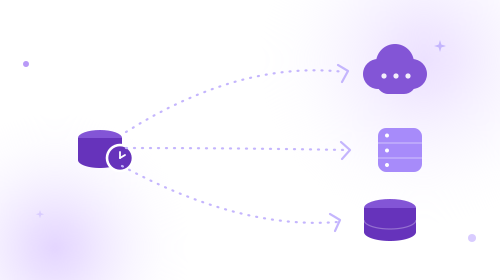
Stash will upload only the diff since the last backup. It splits the targeted files into smaller blobs using Content Defined Chunking (CDC) and uploads only the modified blobs.

Data Encryption
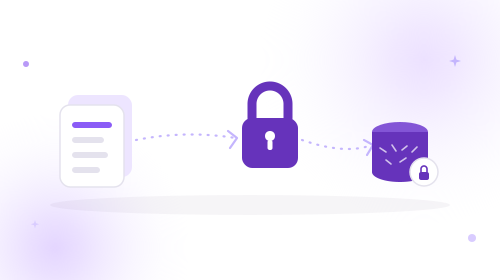
To provide data security, your data needs to be encrypted during the whole process. Stash keeps all the backed up data encrypted using AES-256. So, your data is protected even if it leaks from the backend. And it will not make any sense until they are decrypted.
Volume Snapshot
Take a scheduled snapshot of the volumes of your workload using Kubernetes VolumeSnapshot API. Stash removes the burden of creating VolumeSnapshot manually for each volume used in your workload. Instead, just create a single BackupConfiguration for the workload and Stash will do the rest for you.
Policy Based Backup
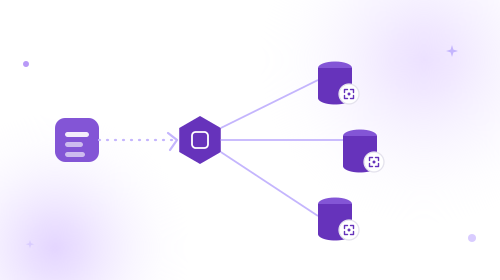
Define a common template to backup all similar types of workloads. Then, just add some annotations to your targeted workload to enable backup for it. You can use a single template to backup all the Deployments, StatefulSets, DaemonSets, ReplicationControllers and ReplicaSets of your entire cluster.

Monitoring
Stash comes with native support for monitoring via Prometheus. You can use builtin Prometheus scrapper or CoreOS Prometheus Operator to monitor your database in Kubernetes. You can use the Grafana to view key operational metrics, including compute/memory/storage capacity utilization, I/O activity, and instance connections.